
6 Reasons Lab Owners Using Medication for Hot Spots, Paw Chewing and Ear Infections Are Switching To This Natural Alternative
Their Labs still get the relief. Just without the repeat vet visits, the side effects, or the monthly prescription.
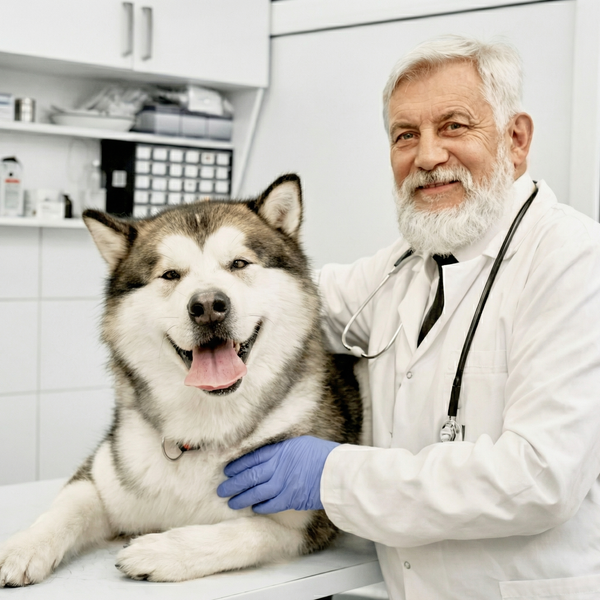
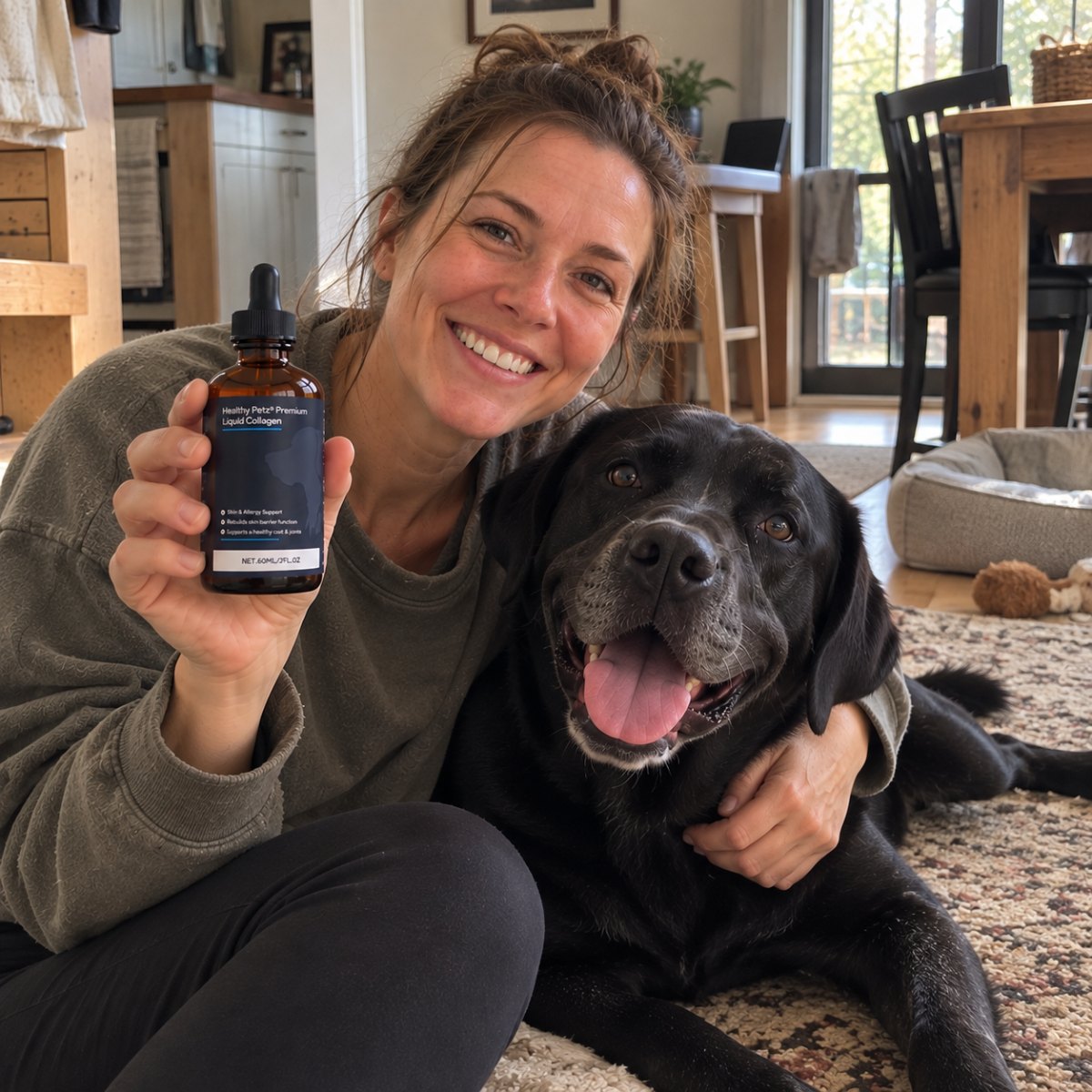
- Vet reviewed
- 60-day guarantee
- Third-party tested
The real cause of your Lab's itching is a skin barrier that can't keep up
Tap each to see the science
01Your dog's skin barrier is made of collagen
It's a wall that seals the skin and keeps pollen, dust mites and grass on the surface. When it's intact, your Lab never reacts.
02A Lab's skin takes more of a beating than almost any breed's
Swimming, wet grass, mud, the lake, the bath. A Lab's thick double coat holds water and pollen right against the skin long after he looks dry on top.
That warm, damp layer under the coat is where the barrier breaks down first, and where hot spots start.
03After age two, a Lab's barrier breaks down faster than it can repair
Every dog loses 7–10% of their skin collagen a year after age two. A Lab is outside, wet and rolling in the grass more than most dogs, so the gaps open sooner and spread faster.
Then the things meant to help speed it up: rounds of prednisone and antibiotics, constant chewing and licking, and medicated baths all break the barrier down even faster.
Allergens get through to the living skin, the immune system overreacts, and you get the hot spots, the chewed paws, the belly rash and the ear infections that keep coming back.
04Medication masks it. Collagen rebuilds it.
Apoquel and Cytopoint turn down the itch signal, but the wall stays broken and keeps thinning underneath. That's why they fade and the dose goes up.
Healthy Petz gives the barrier the collagen it's built from, so the gaps close.
05Why the ear infections keep coming back
Floppy ears trap warm, damp air against skin that's already weak, and yeast and bacteria love it.
Ear drops clear the infection you can see. The skin lining the ear is still weak, so the next one starts a few weeks later.
- Earsred inside, head shaking, smell
- Pawschewing, licking, red between the toes
- Hot spotsneck, hips, base of the tail
- Belly & armpitspink rash, bumps, scabs
- Under the coatflakes, dull coat, extra shedding
Why Apoquel, steroids, ear drops and food switches keep failing your Lab
Every one of these goes after the itch. None of them rebuild the wall that's letting the allergens in.
Works for a few months, then the paw chewing creeps back and the dose goes up. It's dosed by weight, so for a big dog it costs more every month. The barrier was thinning underneath every dose.
Calms a hot spot in days, then it comes straight back when the course ends. Steroids also thin the skin, so each round leaves the barrier weaker.
Six weeks becomes five, then four. $60–$130 a shot on top of the Apoquel, and more for a big dog.
They clear the infection in the ear you can see. The skin lining the ear stays weak, so the next one starts a few weeks later.
Chicken, beef, salmon, the $90 hydrolyzed bag. The food is inside the dog. The allergens are outside, in the grass and the water. The wall is in between.
Made at high heat, which destroys up to 80% of the collagen. Dogs absorb 20–30% of what's left, and a big dog needs a handful a day.
Liquid collagen, absorbed at up to 98%, giving the wall the material it's built from.
Owners are seeing the hot spots stop, the paws clear and the ears settle
Different symptoms, same broken barrier, so they improve together. Here's what Healthy Petz owners say, two of them about their Labs.
Trusted by 50,000+ dog parents
He has not itched or had any hotspots.
“Started using this and April and very impressed. Normally my chocolate lab would get an injection in March and then possibly again in July due to the heat and allergies. He would also be taking apoquil all summer long. I have been very happy with this product. He has not itched or had any hotspots, even with the heat and temperatures being up to 90s in Vermont.”
He almost doesn't scratch anymore.
“My Labrador Sampson has suffered from allergies for a couple years. Numerous medications and trips to his vet, nothing worked. He picked his paws/ body amd scratched so much that he had scabs all over his body. … Sampson has been on the collagen going on 3 months and the scratching and licking has greatly reduced to where he almost doesn't scratch anymore.”
No more itching and no more scabbing.
“It’s now three months later and I am so very pleased with how my dogs skin is looking and feeling . No more itching and no more scabbing of his under belly and under arms . I have tried so many things to help him. He is a large breed dog and his allergy medicine is expensive.”
The head shaking is a thing of the past.
“I have 3 big dogs. We started using this over a month ago and the lack of scratching was the first thing I noticed. Their ears are no longer super red and inflamed inside and the head shaking is a thing of the past.”
A fraction of the cost, even for a 70 lb Lab.
Dosing is by weight. Most Labs are 55–75 lbs, so they take 2 mL a day and a 60 mL bottle lasts about a month. A big Lab over 75 lbs takes 3 mL, about three weeks per bottle. Medication is dosed by weight too, so it's the big dogs that pay the most for it.
| Per month | Healthy Petz | Medication |
|---|---|---|
| Cost | $18–$45 | Apoquel $80–$150 + Cytopoint $60–$130 per shot |
| What it does | Rebuilds the barrier | Suppresses the itch signal |
| Over time | Improvement holds | Dose creeps up |
| How you give it | 2–3 droppers on food | Pills, shots and vet visits |
What happens week by week, and why it doesn't crash
Supplements that suppress symptoms give two weeks of hope, then crash. Rebuilding a structure is slower to start but it holds.
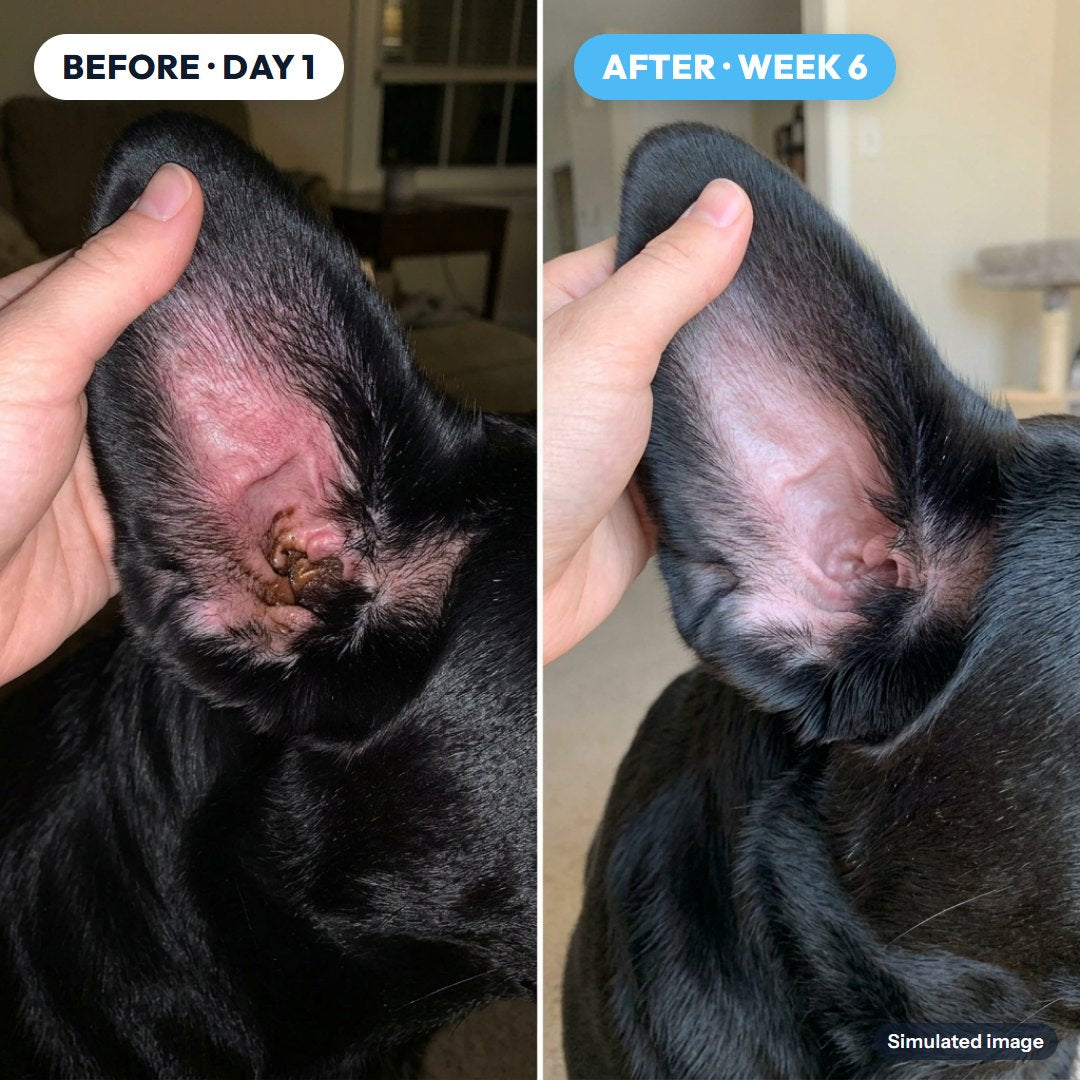
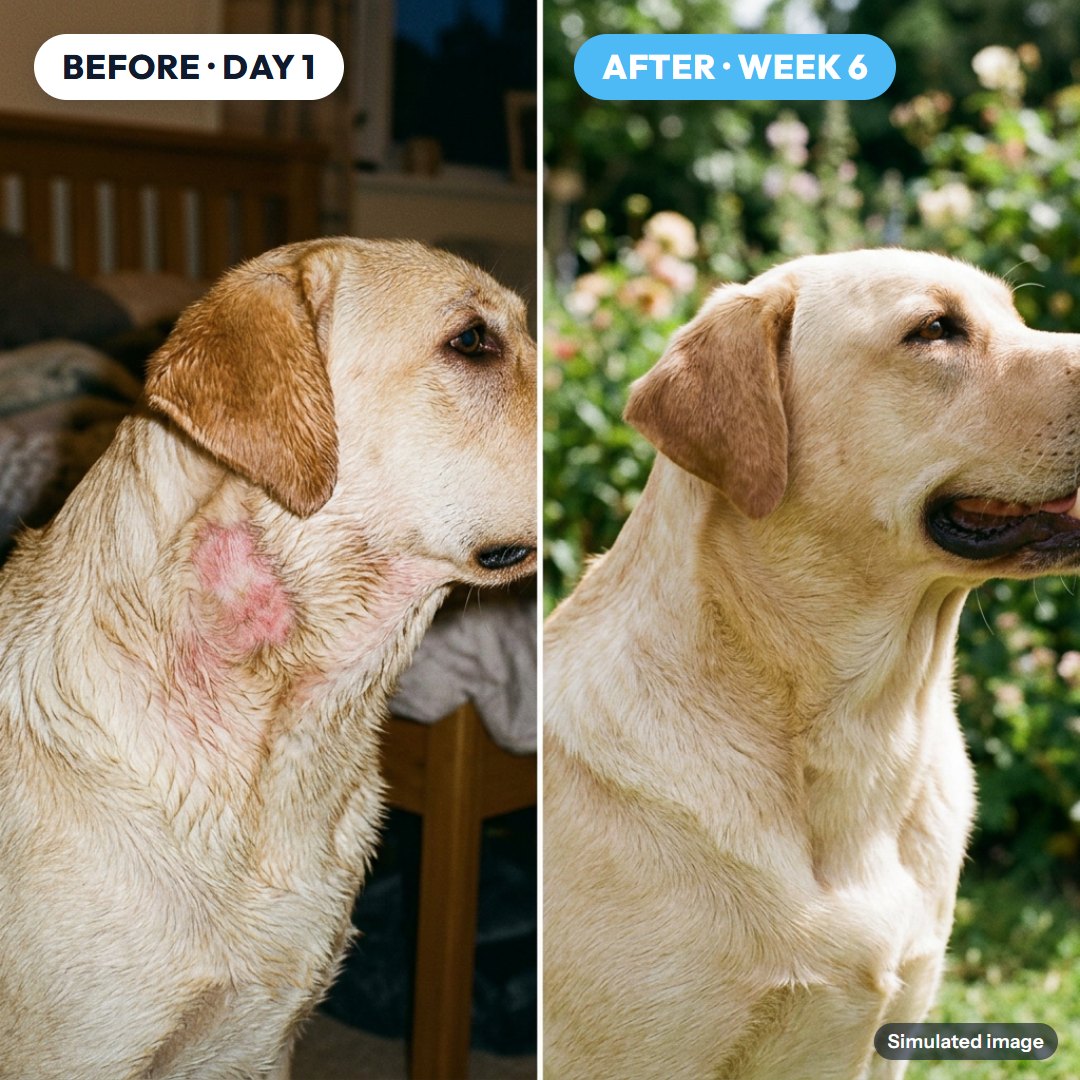
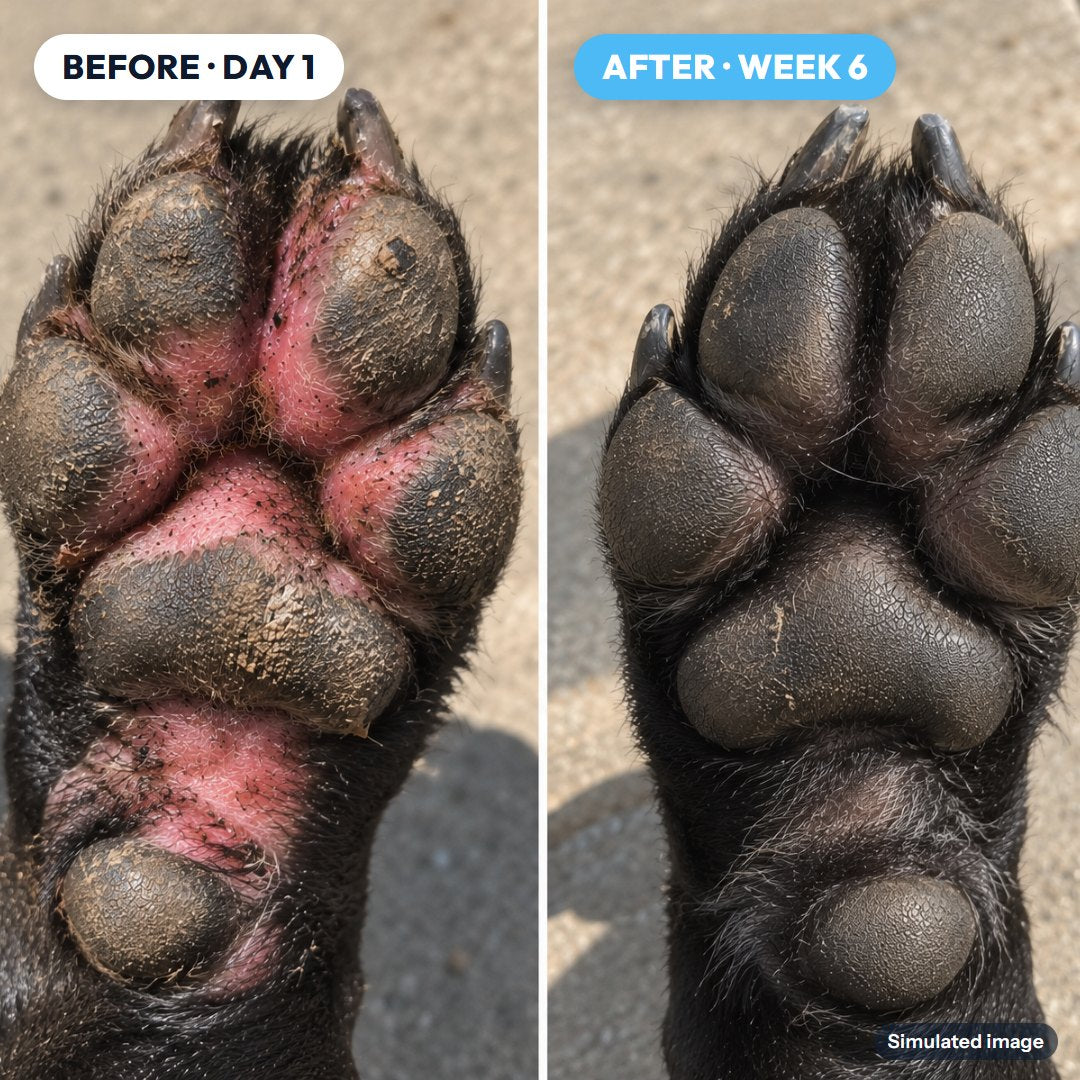
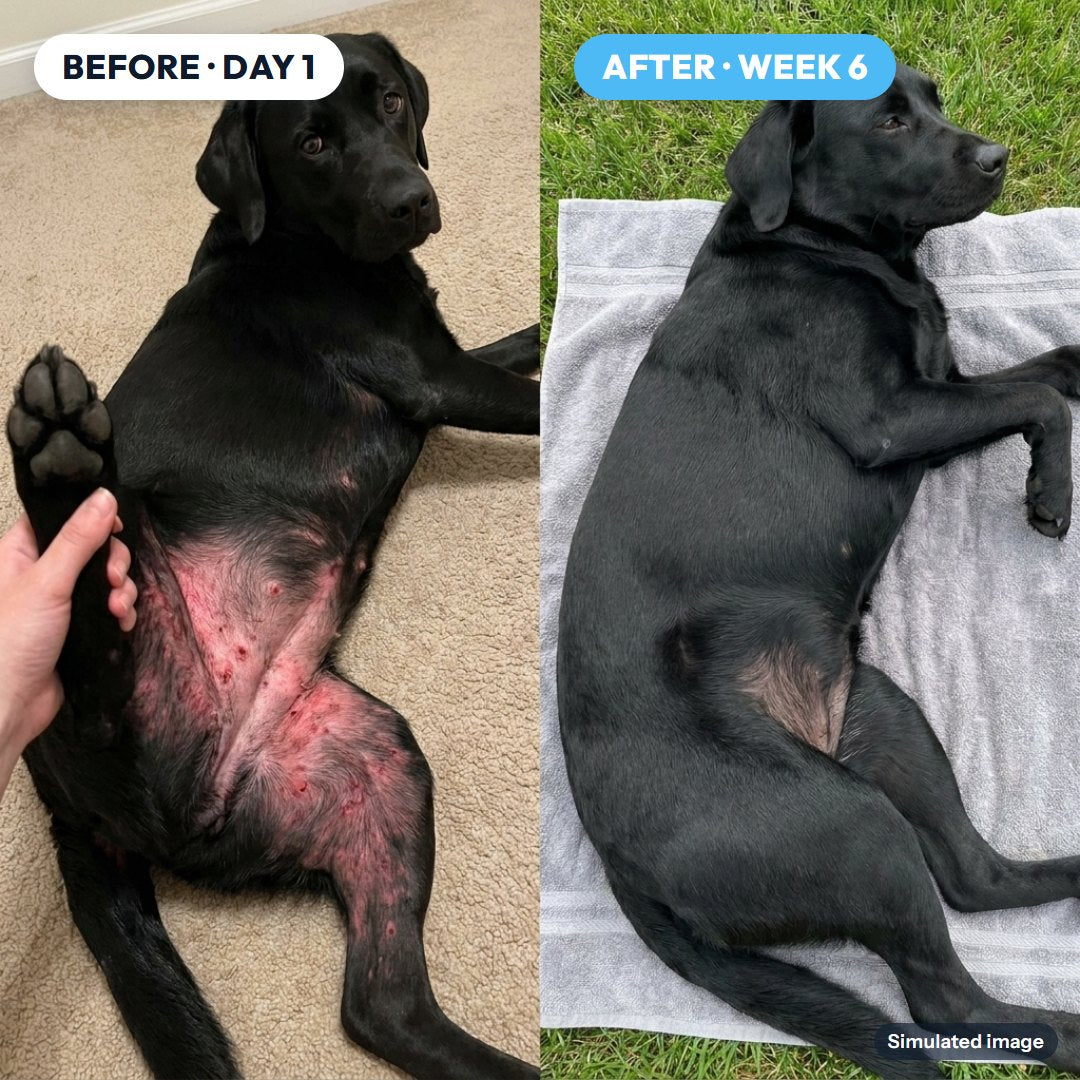
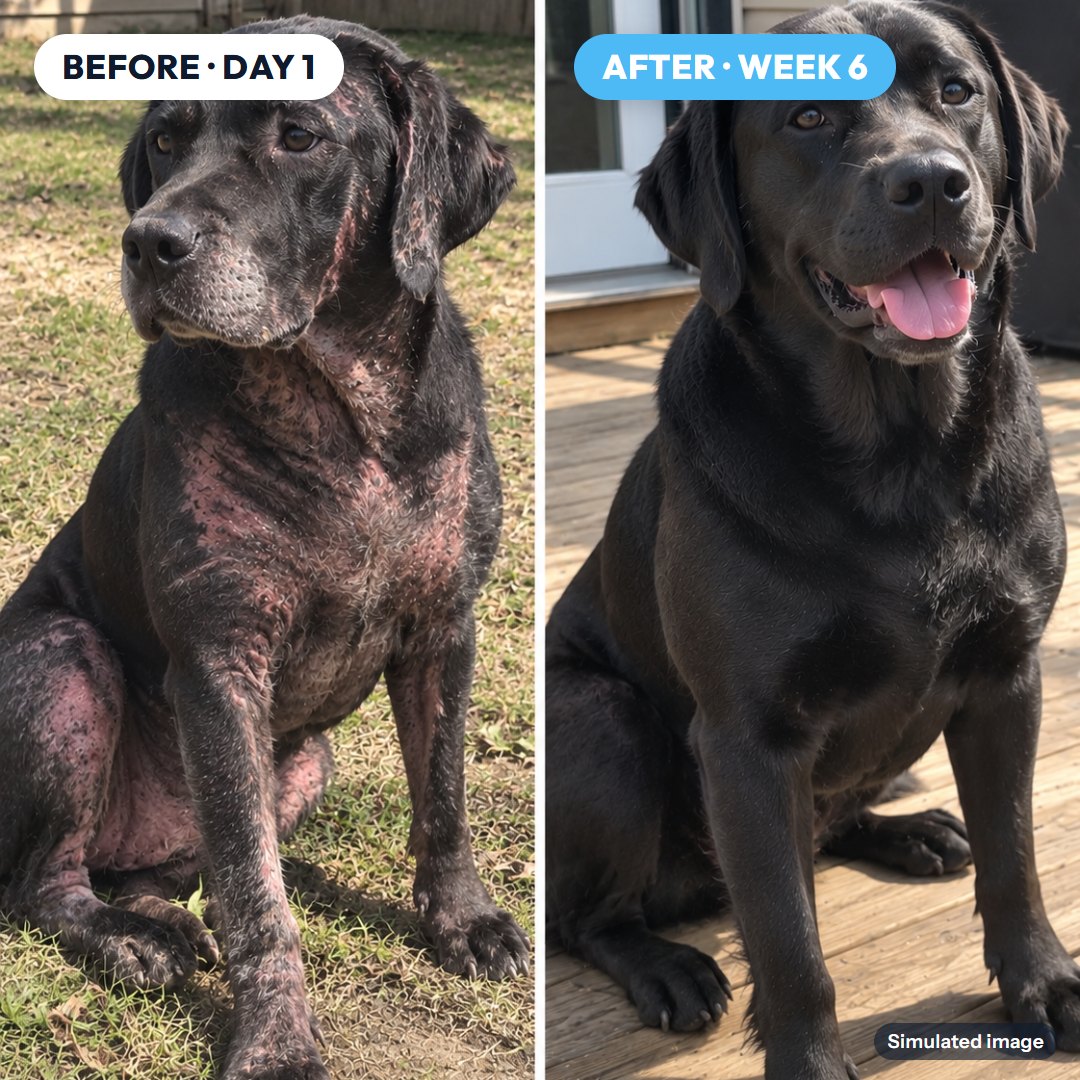
Simulated images showing the kind of change owners describe. Not customer photos. Every dog is different.
- Week 1–2
Nothing visible yet. The barrier rebuilds from the inside first. This is where most people almost quit.
- Week 2–3
Less chewing at the paws. Less licking at night, so everyone sleeps.
- Week 4–6
Fewer new hot spots after a swim. The ears settle and the head shaking slows. Paws stop going red between the toes.
- Month 2–3
The pink fades from the belly and armpits. The coat gets its shine back and the flakes stop.
- Month 3+
Time to talk to your vet about reducing the medication.
Vet recommended, third-party tested, and 60 days risk-free
Made in a GMP-certified facility and third-party lab tested. Three vets now recommend it to their toughest allergy cases.
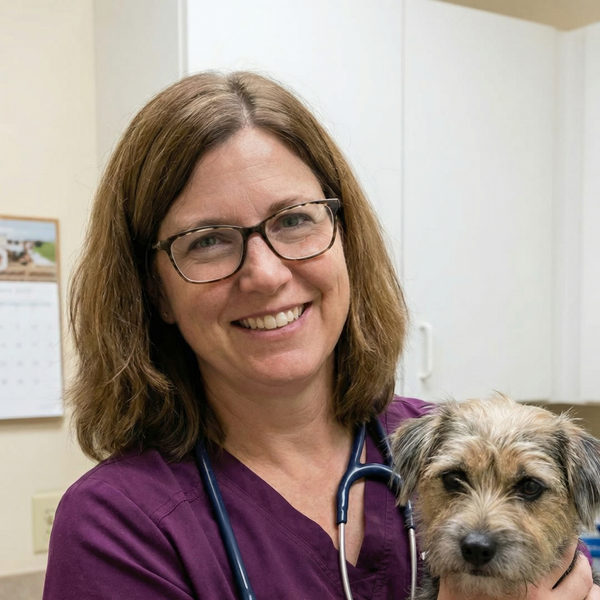
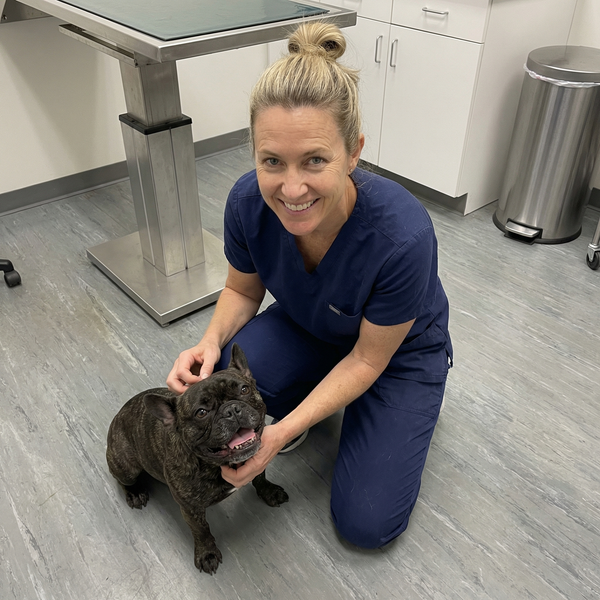
This changed how I treat allergies
“I prescribed Apoquel for over a decade. It works, but dogs kept coming back needing more. When I understood the skin barrier connection, everything shifted. I've seen patients reduce medication within weeks.”
The results surprised me
“I started recommending it to my toughest cases, dogs on maximum Apoquel still scratching. The skin improvements were visible. The coat came back.”
I wish I'd found this years ago
“Most collagen supplements are underdosed chews packed with fillers. This is properly formulated, in liquid form. Dogs actually absorb it.”
60-day money-back guarantee. If you don't see real improvement in the scratching, hot spots, paws or ears within 60 days, email us and we'll refund you.
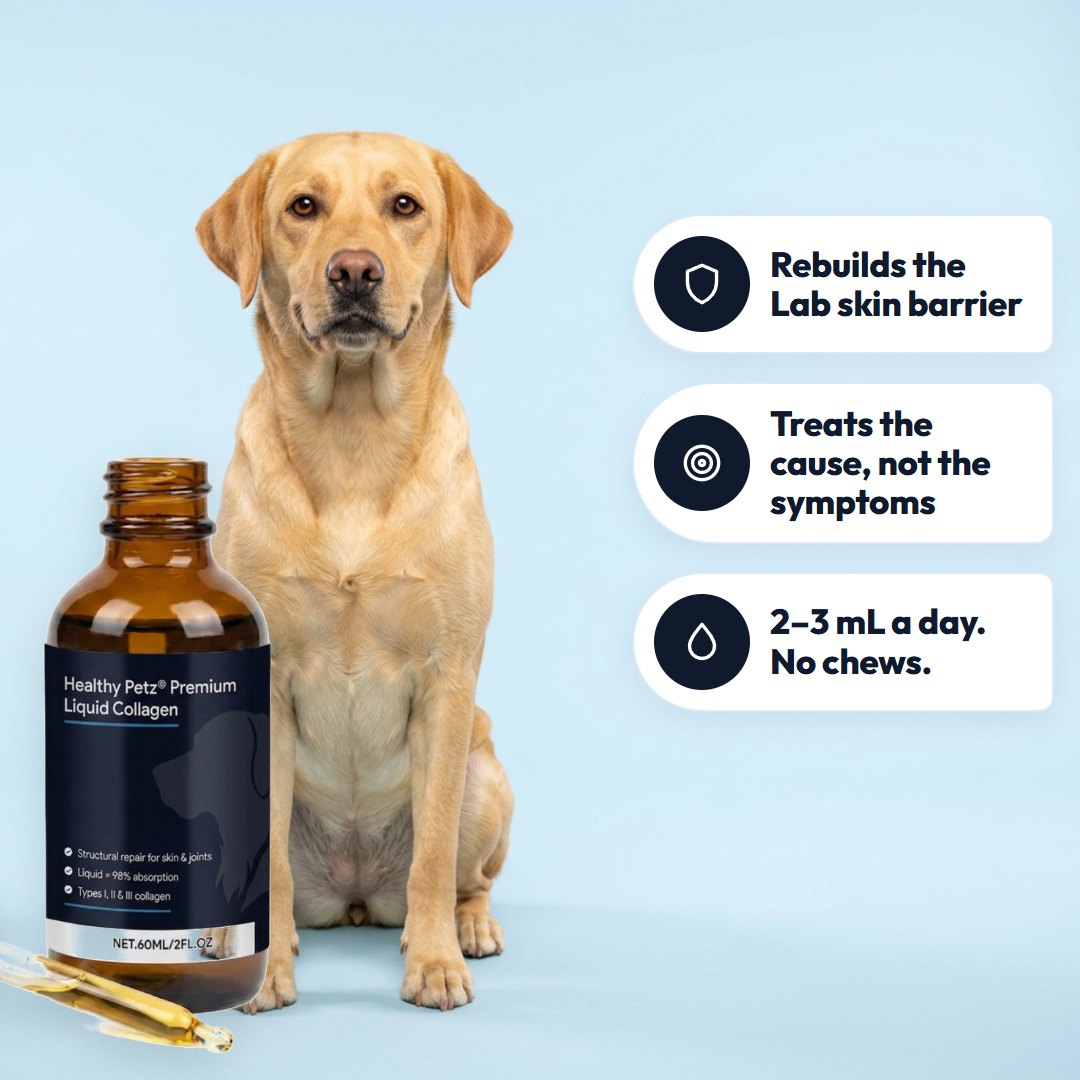
Healthy Petz Premium Liquid Collagen
- No more hot spots, paw chewing or scratching at the ears.
- A fraction of the cost of medications.
- Rebuilds the skin barrier to stop the allergens that cause the problem.
 Trusted by Dr. BernsteinVeterinarian
60-day guarantee
If you don't see real improvement in your Lab's scratching, hot spots, paws or ears within 60 days, email us and we'll sort out your refund. We're confident because this addresses the cause, a broken skin barrier, not just the symptoms.
The science behind it
Your Lab's skin barrier is made of collagen, and it takes more of a beating than almost any breed's: swimming, wet grass and mud, and a thick double coat that holds water and pollen against the skin. After age 2, dogs lose 7–10% of that collagen every year. Constant chewing, steroids, antibiotics and medicated baths speed it up.
As it depletes, gaps form, allergens get through and the immune system goes into overdrive. That's the hot spots, the chewed paws, the belly rash and the ear infections.
Apoquel and Cytopoint suppress the symptoms but don't rebuild the barrier, which is why they fade. Our formula rebuilds it: collagen Types I and III, in liquid form for up to 98% absorption, plus UC-II, Omega 3 and Vitamin C, dosed for a Lab at 2–3 mL a day.
Lab dosage
25–75 lbs (most Labs): 2 mL daily, about 1 month per bottle
Over 75 lbs (big Labs): 3 mL daily, about 3 weeks per bottle
Under 25 lbs: 1 mL daily, about 2 months per bottle
Mix into food once a day. It's tasteless, so even a Lab who inhales his dinner won't notice it. The barrier needs ongoing collagen to stay strong, so keep going once it's working.
How quickly will I see results?
Most owners see the first change at 2–3 weeks. Deeper problems like hot spots, recurring ear infections or a belly rash usually take 6–8 weeks. Nothing at three weeks? Check the dose and keep going to week six. No change at 60 days, and you don't pay.
What's in each 1 mL serving?
Hydrolyzed Collagen Peptides (Types I & III), 900mg: what the skin barrier is built from.
UC-II (Type II Collagen), 40mg: helps the immune system stay calm while the wall rebuilds.
Omega 3, 400mg: the oils in the barrier itself; calms redness and itch.
Vitamin C, 50mg: the body can't build collagen into skin without it.
The building blocks a Lab's skin needs to rebuild its barrier
What the wall is built from.
Keeps the immune system calm while the wall rebuilds.
Without it, collagen passes straight through.
The oils in the barrier itself; calms redness.
Why liquid works better for a big dog
| Healthy Petz liquid | Chews & powders | |
|---|---|---|
| Absorption | Up to 98% | 20–30% |
| Processing | Cold-pressed | High heat (up to 80% destroyed) |
| Collagen | Types I, II & III | Often one type |
| Easy for a big dog | 2–3 droppers on food | A handful of chews a day |
Lab owners ask
How much does my Lab need?
Most Labs are 55–75 lbs, so 2 mL a day. Over 75 lbs, 3 mL. Natural, non-GMO, made in a GMP-certified facility and third-party tested. If your Lab has a sensitive stomach, start with half the dose for the first few days.
Can I give it with Apoquel, Cytopoint or prednisone?
Yes, and with Benadryl, Zyrtec and antibiotics. There's no drug in it, so nothing interferes. Most owners keep the medication going for the first 4–6 weeks while the barrier rebuilds, then work with their vet on reducing it.
He swims all the time. Will it still work?
Yes. Water and wet grass are a big part of why a Lab's barrier breaks down, which is why rebuilding it matters. Dry him off well after a swim, especially the ears and under the collar, and keep going.
His ears keep getting infected. Can I use it with ear drops?
Yes. Use whatever your vet prescribes to clear the infection. The collagen works on the skin barrier underneath, which is what keeps letting them come back.
We've switched his food three times. Will this work?
Yes. Food changes remove trigger proteins but don't fix the broken barrier. Keep him on what he eats now and add the collagen.
Is one bottle enough for a big dog?
One bottle lasts most Labs about a month. That's why most Lab owners pick Buy 2, Get 1 Free or Buy 3, Get 2 Free, so they don't run out around week 4, right when the changes start.
Will this work for a young Lab?
Yes, and it matters more. If a young Lab is already scratching, the barrier is already damaged. Catching it early means less to repair and faster results.
Does it contain chicken or beef?
No. It's marine collagen from wild-caught fish, with no chicken, beef, poultry or dairy.
Why haven't I heard of this before?
Most vets were trained on medications that suppress the itch, not on the skin barrier. That's changing, which is why vets like Dr. Bernstein now recommend it.
What if it doesn't work for my dog?
Full 60-day money-back guarantee. No improvement in 60 days, and you get your money back.
These statements have not been evaluated by the Food and Drug Administration. This product is not intended to diagnose, treat, cure, or prevent any disease. Do not stop prescribed medication without consulting your vet.
